
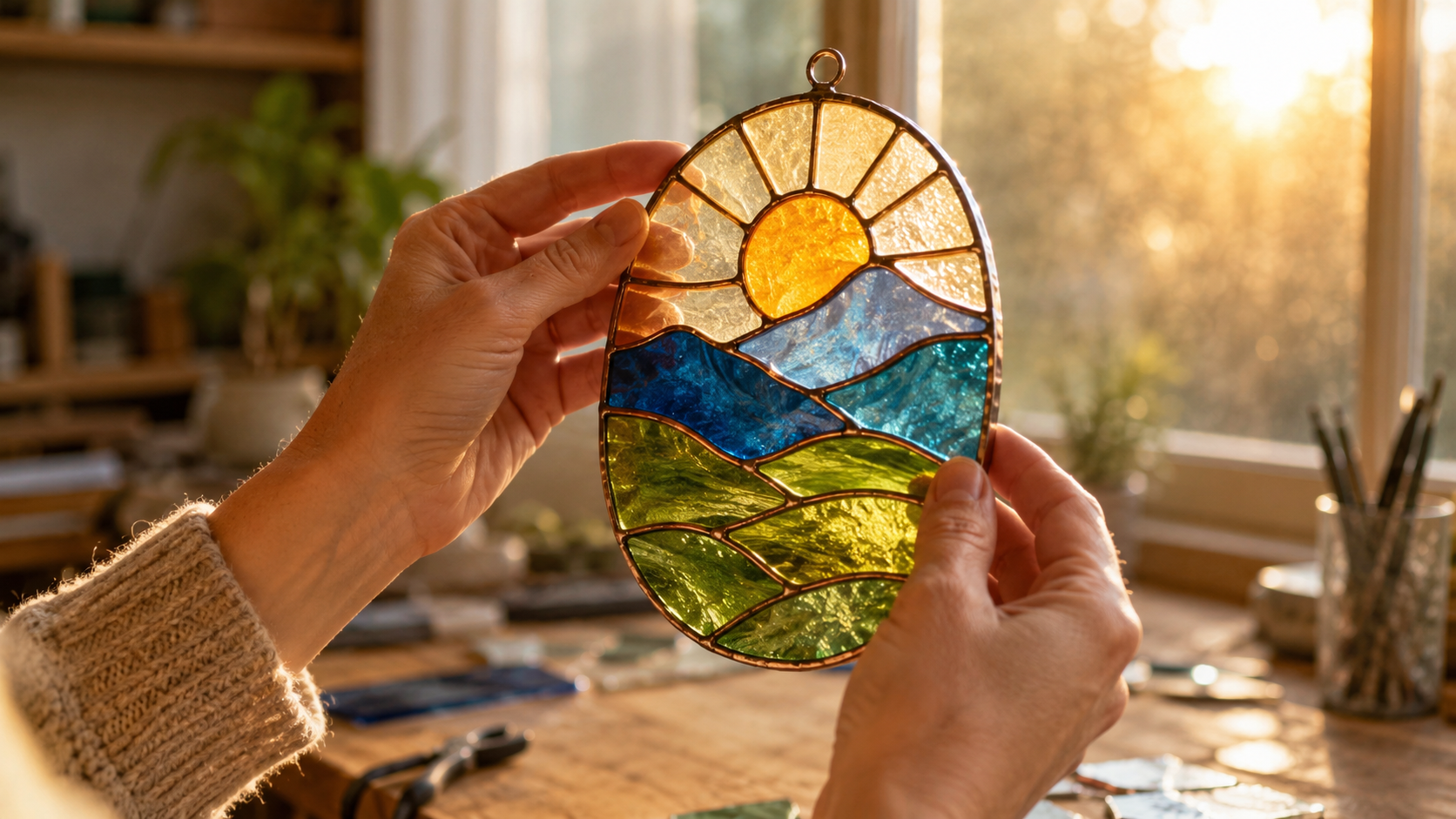
Stained glass has a reputation for being an ancient, mysterious craft reserved for cathedrals and master artisans. The truth is a lot friendlier: the core skills can be learned in a single afternoon, and most people walk away from their first class holding something they made with their own hands.
This guide walks you through what stained glass actually involves, whether it's hard to learn, what it costs to start, and the fastest way to go from curious to confident.
Is stained glass hard to learn?
Short answer: no — not to start.
Stained glass looks intimidating because the finished pieces are intricate. But the fundamental process breaks down into a handful of repeatable steps, and none of them require artistic talent or years of practice to begin. What it does require is patience and attention to detail, which is exactly why so many people find it relaxing rather than stressful.
Here's the honest breakdown:
- Easy to learn, satisfying immediately. Most beginners complete a small finished piece — a suncatcher or panel — in their very first class.
- Takes time to master. Like any craft, going from "I made a thing" to "I design my own complex windows" is a longer road. But that road is optional and enjoyable.
The hardest part for most beginners is cutting glass cleanly and getting solder to flow smoothly. Both click into place with a little hands-on guidance — which is exactly what a good class provides.
If you can trace a line and follow step-by-step instructions, you can learn stained glass.
The stained glass process, step by step
When you learn stained glass, you're really learning four core skills. Here's what each one involves:
- Cutting the glass. You score the surface with a glass cutter along your pattern line, then break it cleanly along that score. It feels alarming the first time and completely natural by the fifth.
- Grinding the edges. A small grinder smooths each piece so it fits snugly against its neighbors — this is what makes the finished piece look professional instead of gappy.
- Foiling (the copper foil method). Each glass piece gets wrapped in adhesive copper tape along its edges. This is the technique most beginners learn first because it's forgiving and allows for detailed, delicate designs.
- Soldering. You run molten solder along the copper seams, fusing all the pieces into one solid, finished panel. This is the step that feels the most like magic when it works.
That's the whole loop. Everything else — bigger projects, lead came, three-dimensional pieces — builds on these four moves.
What do you need to get started?
This is where a lot of beginners get stuck, because a full home setup isn't cheap. A glass cutter, grinder, soldering iron, foil, flux, solder, and safety gear add up quickly — and that's before you've figured out which tools are actually worth buying.
That's the single biggest reason to start with a class instead of a kit: you get to try the whole process, with professional tools and materials included, before spending a dollar on equipment. You find out whether you love it first. If you do, then you invest in your own setup — and you'll actually know what to buy.
The fastest way to learn: take a beginner class
You can absolutely learn stained glass from books and videos. But the craft is deeply hands-on, and a few things are hard to learn from a screen: how much pressure to use when scoring, how the solder should look when it's flowing right, how to hold the iron. An instructor standing next to you shortcuts weeks of frustration.
A good beginner class gives you:
- All tools and materials, provided and set up for you
- Small class sizes so you get real attention
- A finished piece to take home the same day
- The confidence to know whether this is your next hobby
At Scottish Stained Glass, our Copper Foil Level 1 class in Centennial is built exactly for this — no experience needed, maximum six students, everything included. You leave with a finished suncatcher and the skills to make more.
Ready to make your first piece?
Learning stained glass isn't about talent — it's about getting your hands on the glass with someone experienced showing you the way. Most people are surprised by how quickly it clicks, and how good it feels to hold something they made from raw glass and light.
If you're in the Denver metro area, the easiest first step is a beginner class right here in Centennial.